The palazzo a painter built for himself, the life he lived there, and where his work hangs today
When Rubens came home from Italy, he was already the most ambitious painter in the Low Countries. His house was part of that ambition: a Flemish townhouse extended with a studio wing in Italian Baroque style, a monumental portico and a formal garden, all of his own design.
It was his home, his workshop and his showroom for almost 30 years. Today it is the museum of his life and work, and, after the current restoration, will again show the rooms where he lived.
Peter Paul Rubens is born on 28 June in Siegen, Germany, where his Antwerp family lives in exile. After his father's death, his mother brings the children back to Antwerp.
Rubens works for the Duke of Mantua and studies ancient sculpture and the Italian masters in Rome, Venice and Genoa. Italian palace architecture will shape his house.
Back in Antwerp, he becomes court painter to the Archdukes Albert and Isabella, rulers of the Spanish Netherlands, and marries Isabella Brant.
Rubens buys a house on what was then the Vaartstraat and starts turning it into an Italian palazzo, with a studio wing, a portico and a garden of his own design.
Commissions pour in from churches and courts across Europe. Assistants, including the young Anthony van Dyck, work in the studio, and clients visit the house to see works in progress.
Isabella dies in 1626. Rubens travels as a diplomat, helps negotiate peace between Spain and England, and is knighted by Charles I. In 1630 he marries Helena Fourment.
Rubens dies in his house on 30 May 1640 and is buried in St James's Church. His widow later lets the house to the exiled William Cavendish, and it is eventually sold.
Altered by successive owners, the palazzo loses much of its original appearance. The portico and garden pavilion survive.
Helped by a legacy from the architect Henri Blomme, the City of Antwerp buys the house in 1937. After a long restoration it opens as a museum in 1946.
The museum closes in January 2023 for a major renewal. The new entrance building, the Rubens Experience, the garden and the library open on 30 August 2024. The residence follows, by 2030 at the earliest.
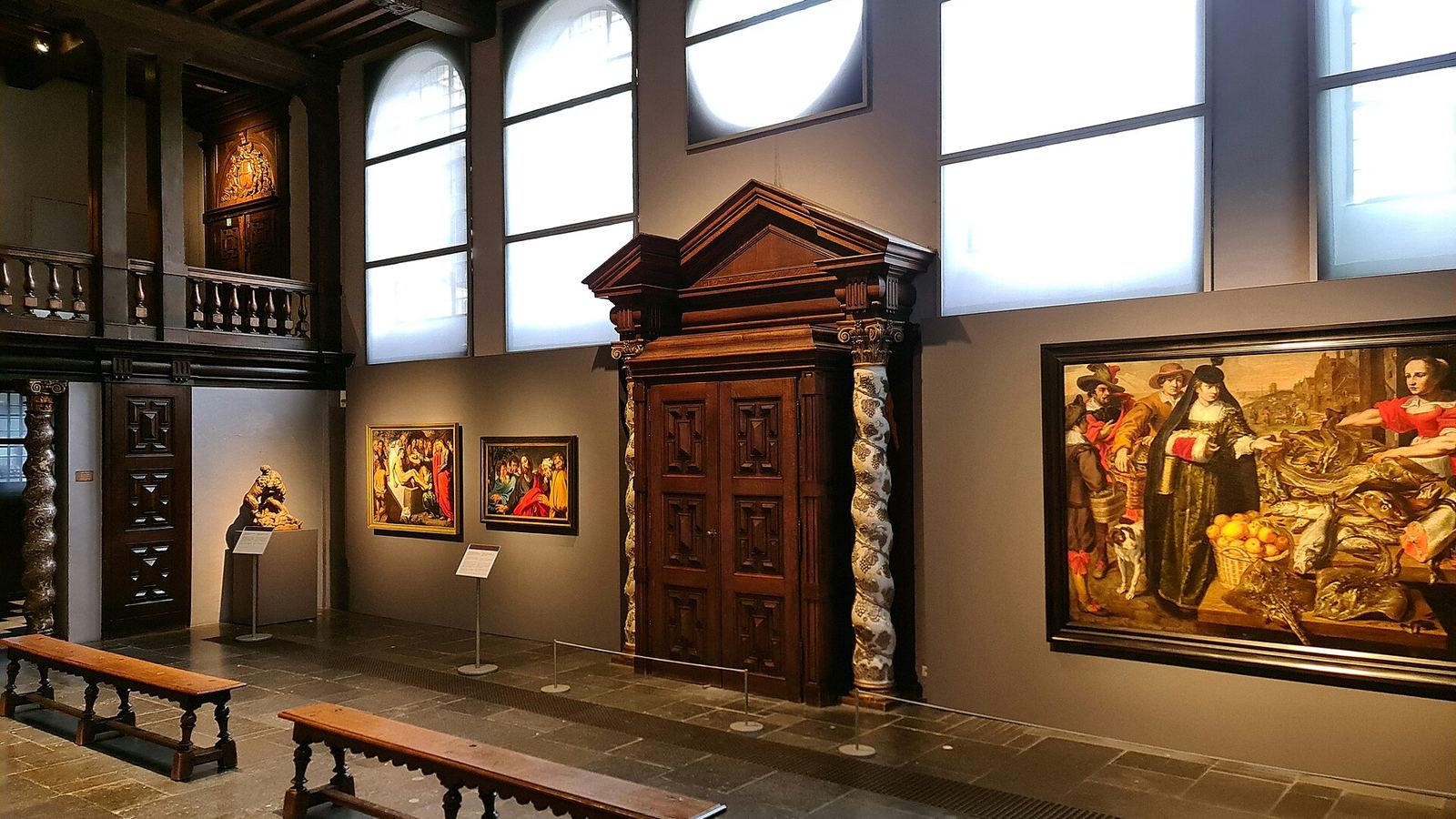
Rubens added a large studio in Baroque style to the old Flemish house, with tall windows for light and space for his enormous canvases. A gallery let visitors look down on the work in progress, and a semicircular sculpture room displayed his collection of antique marbles.
The triumphal portico between courtyard and garden was inspired by Roman architecture and decorated with gods and quotations from the poet Juvenal. It appears in several of his paintings and is one of the best-preserved original parts of the house.
Rubens called his garden his 'paradise on earth', but no plan of it survives. The 2024 redesign by Ars Horti is based mainly on his painting 'The Walk in the Garden', which shows parterres, a tulip meadow, citrus in pots and a fountain. It holds 17,500 plants, including a yew almost 300 years old.
The museum's collection includes paintings by Rubens such as his self-portrait from around 1630, 'Adam and Eve' and an 'Annunciation', together with works by his pupils and contemporaries.
Cathedral of Our Lady. Four altarpieces: The Elevation of the Cross, The Descent from the Cross, The Resurrection of Christ and The Assumption of the Virgin.
KMSKA. The Royal Museum of Fine Arts holds the city's largest group of Rubens paintings, reopened in 2022 after a long renovation. Tickets →
St James's Church. Rubens's burial chapel, with his late painting Our Lady with Saints above the altar.
St Paul's and St Charles Borromeo. Baroque churches with Rubens paintings; at St Charles, he designed the ceiling paintings, lost in a fire in 1718.
Plantin-Moretus and the Snijders&Rockox House. The printing house where Rubens designed title pages, and the home of his friend, the mayor Nicolaas Rockox.
Rubens defined Baroque painting in northern Europe, and Antwerp is where you see him at full scale: in the churches his altarpieces were made for, and in the house he built.
The Highlights walk stops at the Rubens House and tells his story on the way. See the tour →
Rubens Experience and garden open daily except Wednesdays. €12, free under 18.